Algunos de los objetivos de este experimento son:
* Descubrir qué es realmente la masa.
* Qué es la materia oscura (+95% de la masa del Universo)
* Descubir cuántas son las partículas totales del átomo.
* Existencia o no de las partículas supersimétricas
* Descubir por qué no hay más antimateria.
* Cómo era la materia durante los primeros segundos que siguieron al Big Bang.
Bueno, lo que nos trajo aquí... las fotos.


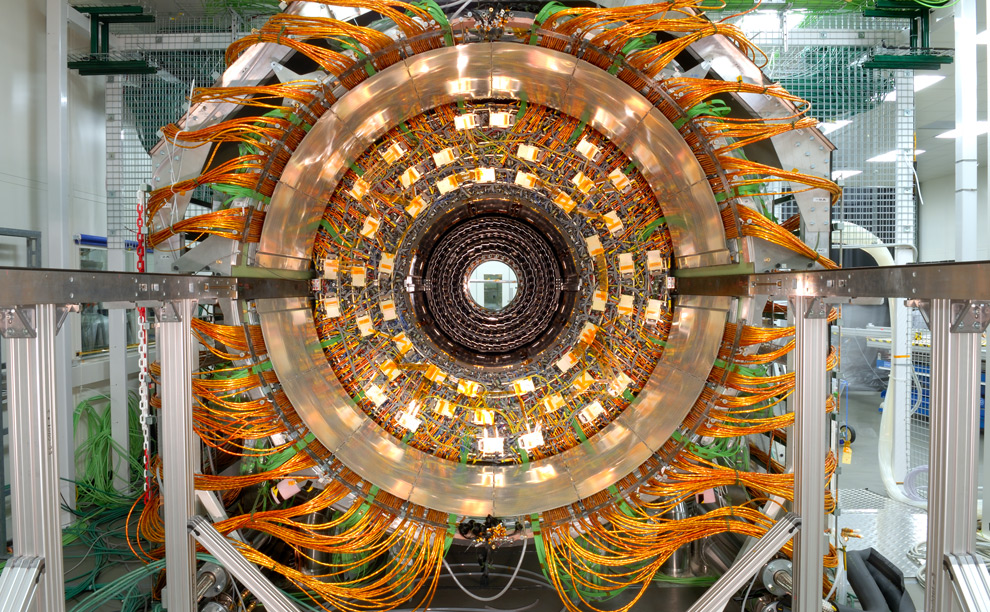
View of the CMS (Compact Muon Solenoid) experiment Tracker Outer Barrel (TOB) in the cleaning room. The CMS is one of two general-purpose LHC experiments designed to explore the physics of the Terascale, the energy region where physicists believe they will find answers to the central questions at the heart of 21st-century particle physics. (Maximilien Brice, © CERN)
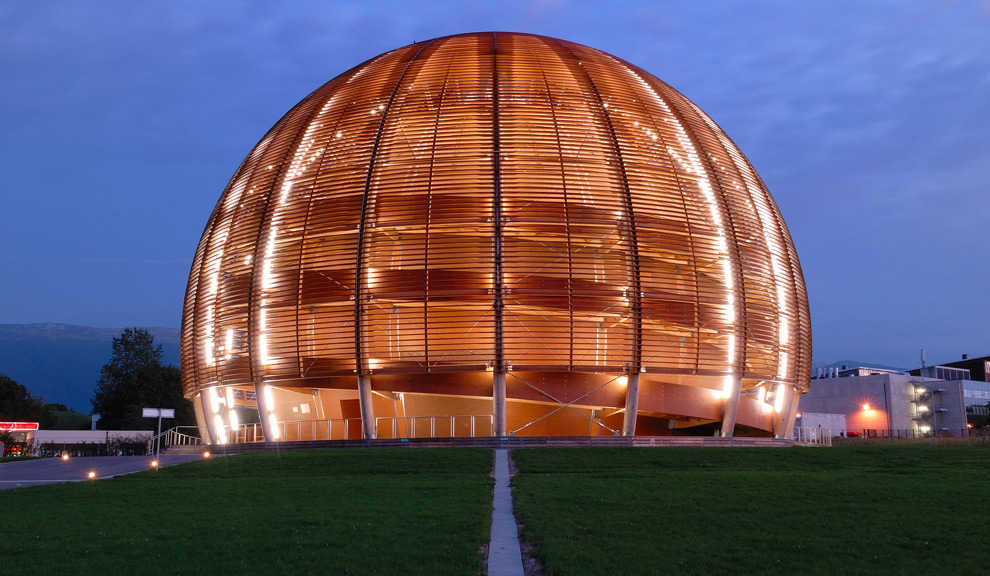
The Globe of Innovation in the morning. The wooden globe is a structure originally built for Switzerland's national exhibition, Expo'02, and is 40 meters wide, 27 meters tall. (Maximilien Brice; Claudia Marcelloni, © CERN)
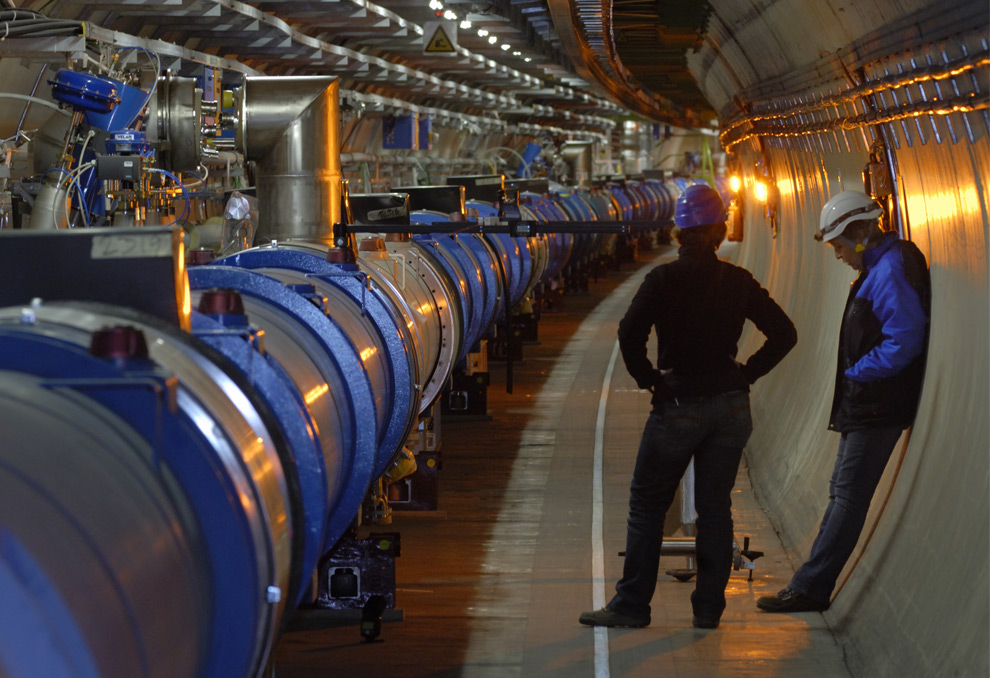
Checks are performed on the alignment of the magnets in the LHC tunnel. It is vital that each magnet is placed exactly where it has been designed so that the path of the beam is precisely controlled. (Maximilien Brice, © CERN)
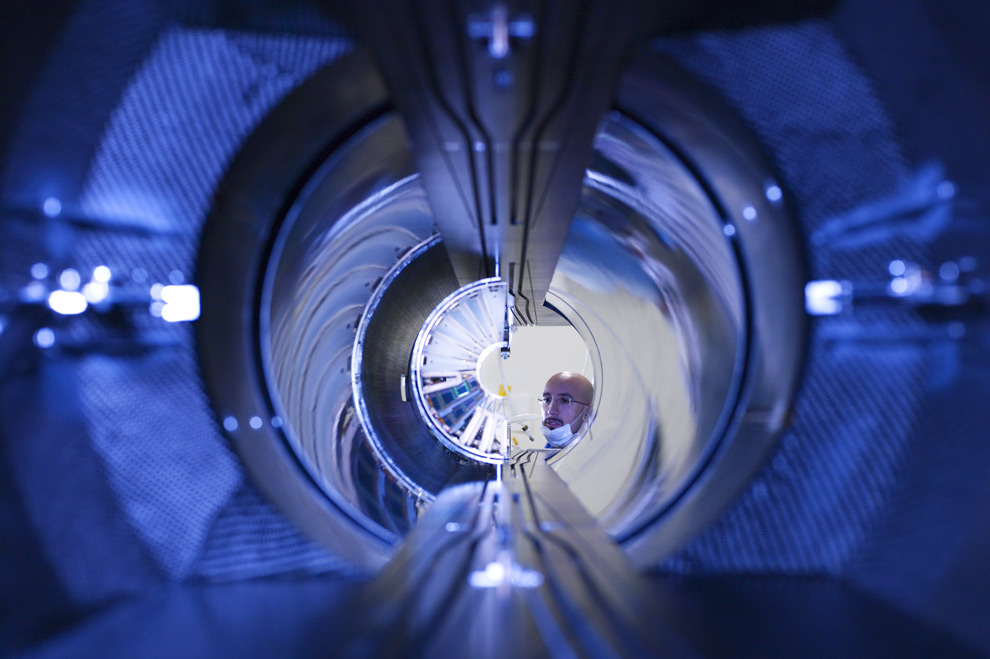
Photo from the CMS pixel-strip integration test performed at the Tracker Integration Facility at the Meyrin site. (Maximilien Brice, © CERN)

A welder works on the interconnection between two of the LHC's superconducting magnet systems, in the LHC tunnel. (Maximilien Brice, © CERN)
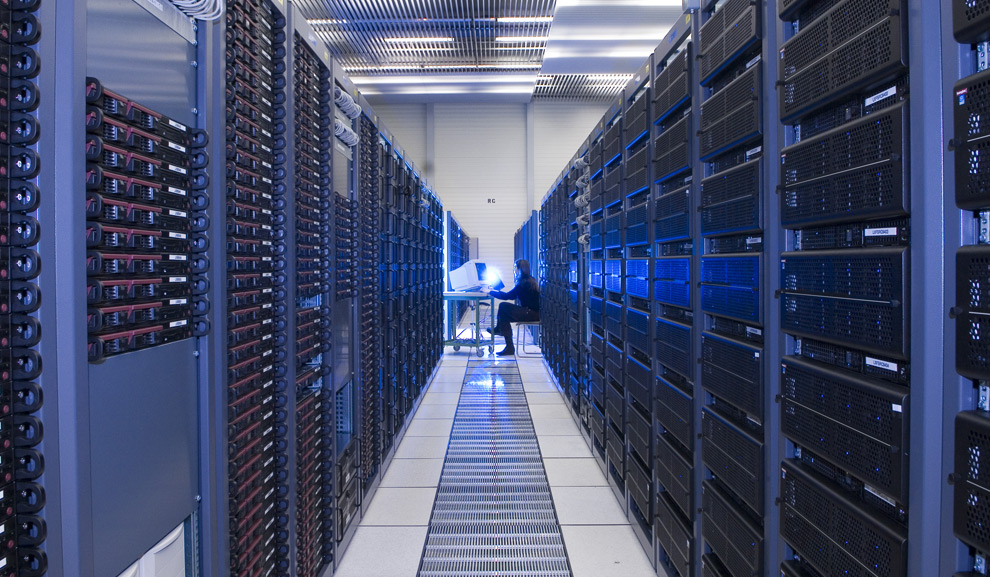
View of the Computer Center during the installation of servers. (Maximilien Brice; Claudia Marcelloni, © CERN)
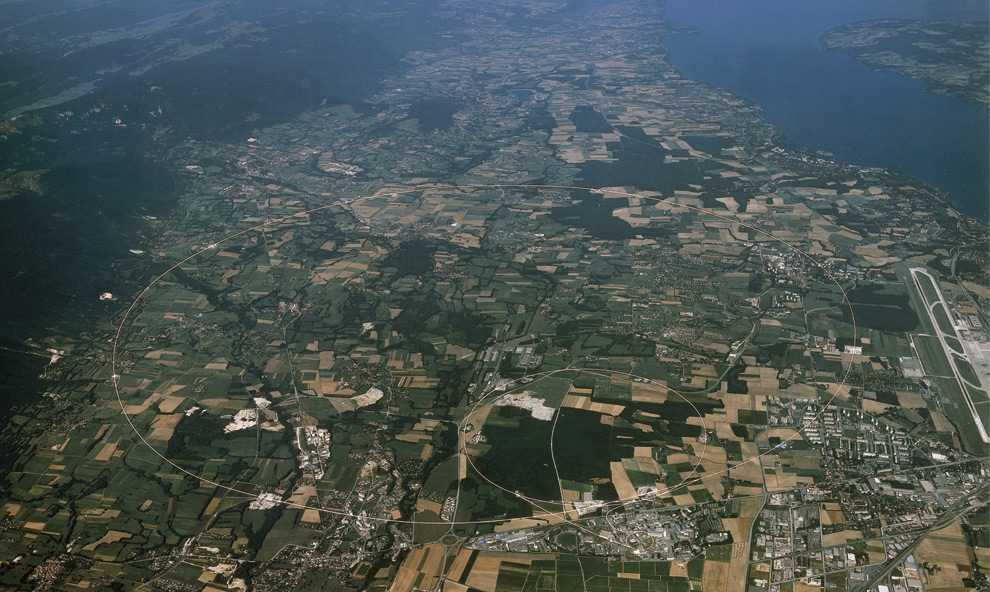
Aerial view of CERN and the surrounding region of Switzerland and France. Three rings are visible, the smaller (at lower right) shows the underground position of the Proton Synchrotron, the middle ring is the Super Proton Synchrotron (SPS) with a circumference of 7 km and the largest ring (27 km) is that of the former Large Electron and Positron collider (LEP) accelerator with part of Lake Geneva in the background. (© CERN)
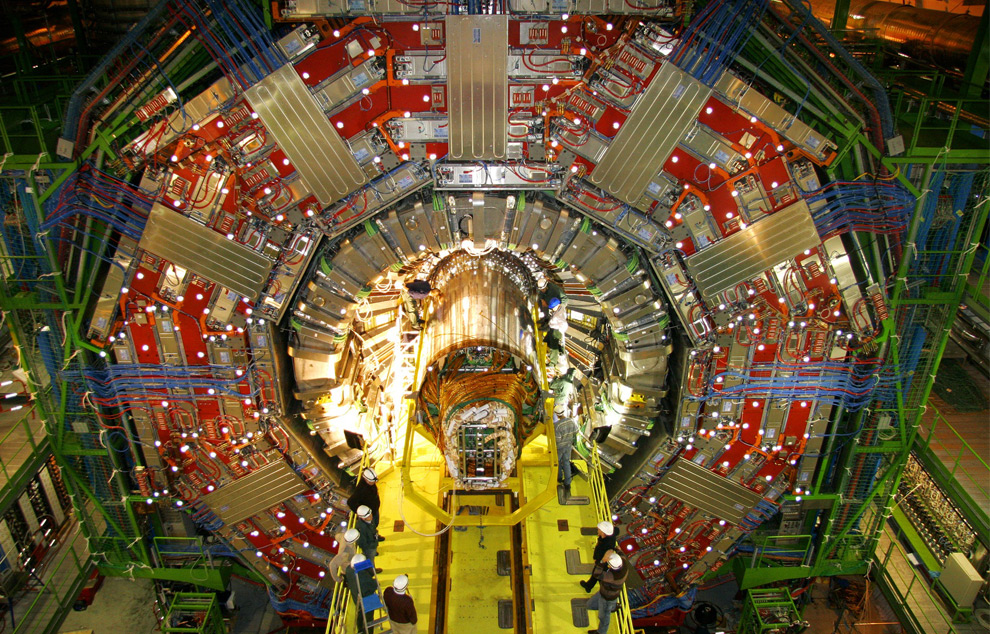
Installation of the world's largest silicon tracking detector in the CMS experiment. (Michael Hoch, © CERN)
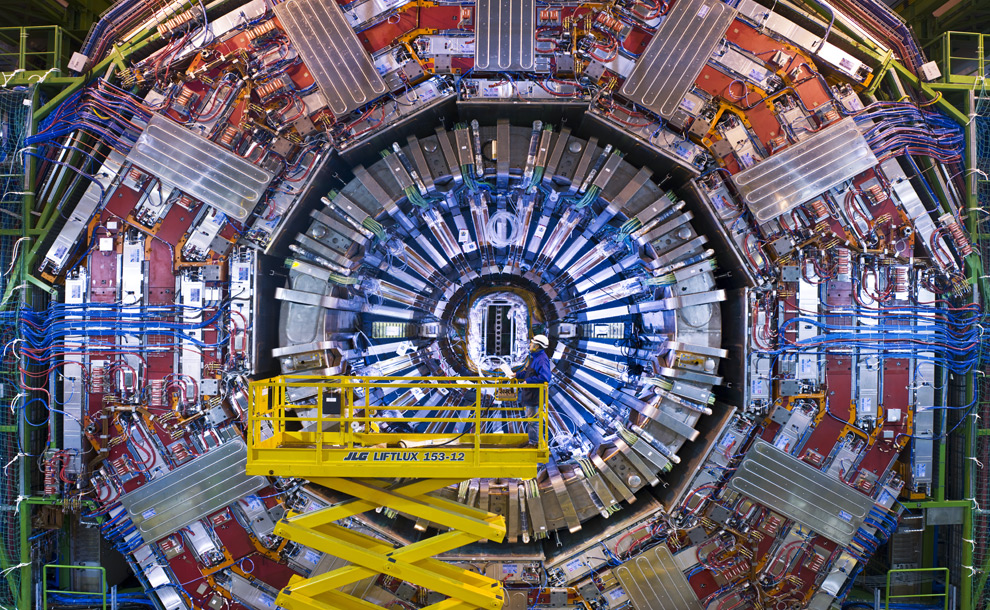
View of the CMS detector at the end of 2007. (Maximilien Brice, © CERN)


No hay comentarios.:
Publicar un comentario